Historical background: John Hicks
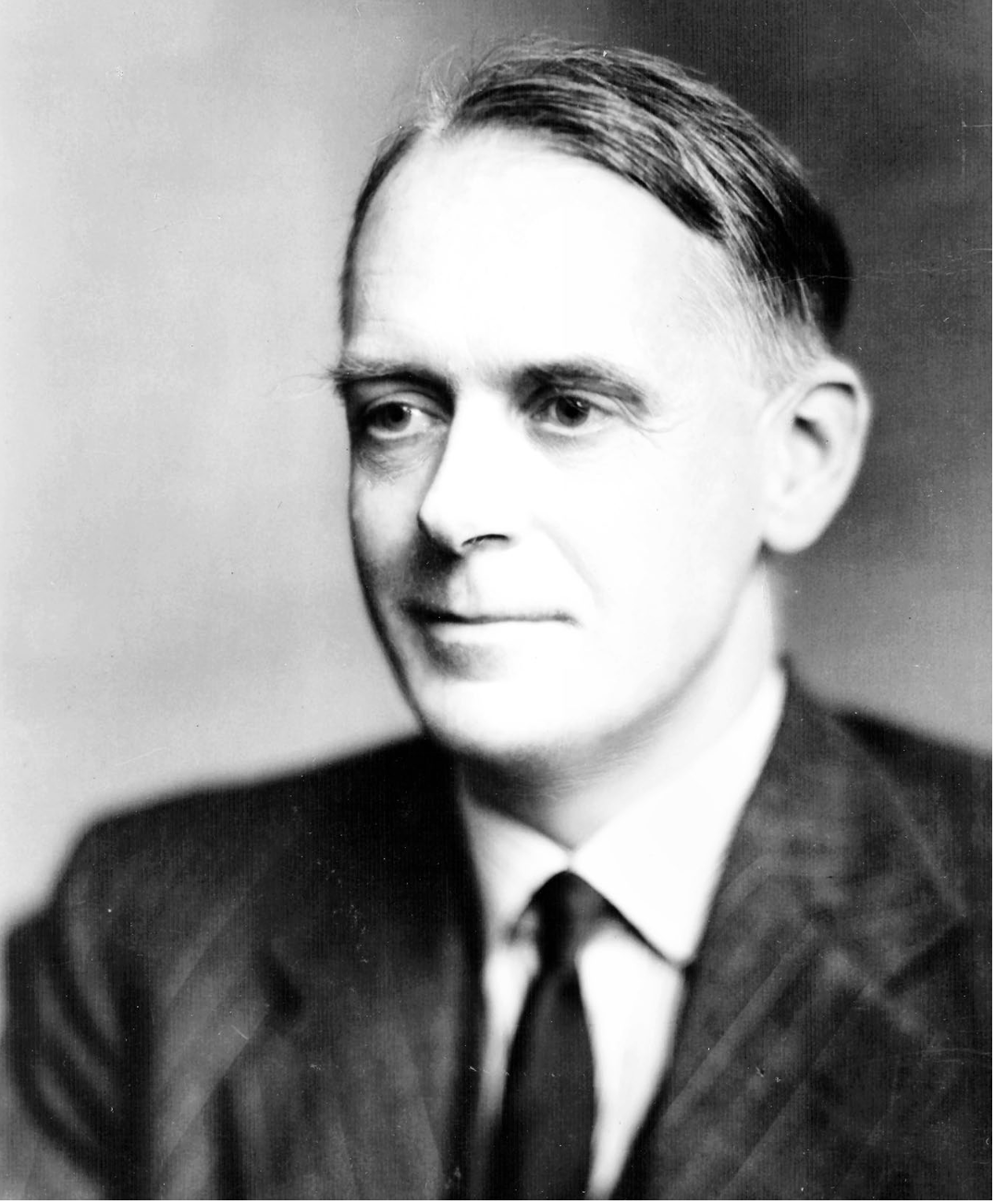
John R. Hicks (1904--1989)
Hicks was a British economist who began his Oxford studies in mathematics before moving to philosophy, politics, and economics. At the London School of Economics he started with descriptive work on labor and industrial relations, then turned increasingly to economic theory. He later worked at Cambridge, Manchester, and Oxford, and shared the 1972 economics Nobel Prize with Kenneth Arrow for work on general equilibrium and welfare theory.
His work connects directly to our questions. In The Theory of Wages (1932), substitution and technical change help explain the division of income between labor and capital. As Benjamin Moll's overview shows, Hicks also helped develop compensated demand, the distinction between income and substitution effects, and the IS--LM model. These became standard tools across microeconomics and macroeconomics.
Sources: Hicks's Nobel autobiography (Nobel Lectures, Economics 1969--1980); Benjamin Moll, About John Hicks (with links to the original works).
The concept of the elasticity of substitution was introduced by John Hicks in 1932 in his book The Theory of Wages. Hicks's motivation lay in questions over the distribution of income between labor and capital and how technological change affects this distribution. His questions are not that different from the ones we have now. Hicks asked
"Is economic progress likely to raise or lower the proportion of the National Dividend which goes to labour?" Hicks (1932, p.113), Chapter VI, printed p.~113 (PDF p.~126).
He goes on to show that the answer depends on the elasticity of substitution:
"An increase in the supply of any factor will increase its relative share (i.e., its proportion of the National Dividend) If its "elasticity of substitution" is greater than unity [...] The "elasticity of substitution" is a measure of the ease with which the varying factor can be substituted for others. If the same quantity of the factor is required to give a unit of the product, in any circumstances whatever, then its elasticity of substitution is zero. If all the factors employed are for practical purposes identical, so that the varying factor can be substituted for any co-operating factor without any trouble at all, then the elasticity of substitution is infinite. The case where the elasticity of substitution is unity can only be defined in words by saying that in this case (initially, before any consequential changes in the supply of other factors takes place) the increase in one factor will raise the marginal product of all other factors taken together in the same proportion as the total product is raised."
What did Hicks have in mind when he was thinking about substitutability?
"Substitution, in the sense in which we are using it, may take any of three forms:
- The change in the relative prices of the factors may lead simply to a shift over from the production of things requiring little of the increasing factor to things requiring more. > If capital increases, the commodities in whose production capital had already been used to an extent above the average will become cheaper relatively to others, and presumably, therefore, more of them will be made.
- Methods of production already known, but which did not pay previously, may come into use. > This form will include, possibly as its most important case, the mere extension of the use of instruments and methods of production from firms where they were previously employed to firms which could not previously afford them.
- The changed relative prices will stimulate the search for new methods of production which will use more of the now cheaper factor and less of the expensive one.
Partly, therefore, substitution takes place by a change in the proportions in which productive resources are distributed among existing types of production. But partly it takes place by affording a stimulus to the invention of new types. We cannot really separate, in consequence, our analysis of the effects of changes in the supply of capital and labour from our analysis of the effects of invention."
So, Hicks is also concerned by how innovation can lead to substitution between capital and labor in a way that reduces the share of labor in total income.
"[...] although an invention must increase the total Dividend, it is unlikely at the same time to increase the marginal products of all factors of production in the same ratio [...]
then we can classify inventions according as their initial effects are to increase, leave unchanged, or diminish the ratio of the marginal product of capital to that of labour.
[The] predominance of labour-saving inventions strikes one as curious. [The reason] is surely that which was hinted at in our discussion of substitution. A change in the relative prices of the factors of production is itself a spur to invention, and to invention of a particular kind-directed to economising the use of a factor which has become relatively expensive. [...] where invention is very active, the elasticity of substitution will be high and will remain high. Thus, the relative share of capital will tend to increase; and that of labour to fall."
The conclusion that Hicks arrives at in the 1930s is worrisome, even as it did not come to pass, and it echoes the worries of today as artificial intelligence is developed:
"[...] a fall in the general level of real wages is really likely to occur as the result of invention only on those rare occasions when invention breaks into a new and extensive field of industry that has long been conservative in its methods. Such "economic revolutions" always cause maladjustment, and social unrest arising from the maladjustment; but it may be useful to point out that in such times the malaise may go deeper. A fall in the equilibrium level of real wages is here a real possibility."
However, Hicks goes on to dispel some of those worries:
"But it is difficult to feel that this danger is a very pressing one today. The generalised character of technical change is a considerable safeguard against it. Inventive activity usually makes itself felt quickly enough, so that a prolonged failure to adjust technical methods to new circumstances is unlikely on a large scale. Our continuous "industrial revolution" protects us from the discontinuous revolutions of the past."
The rest of this course looks at these questions through modern techniques.